


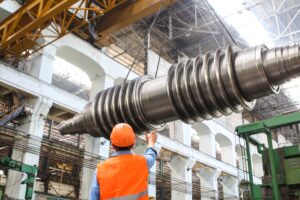
 Unplanned equipment downtime can wreak havoc on production schedules, leading to costly repairs, lost production time, and significantly increased operational expenses. In the US, some estimate that unplanned downtime costs manufacturers alone up to $50 billon a year! If you consider something like an auto factory, a shutdown assembly line can cost thousands of dollars a minute. Traditional reactive maintenance strategies, where repairs only happen after equipment fails, often exacerbate these issues.
Predictive maintenance, however, offers a proactive approach that minimizes downtime and maximizes equipment lifespan. By leveraging the power of industrial data loggers, businesses can gain valuable insights into the health of their equipment, enabling them to anticipate potential failures before they occur.
Key Points
- Early Detection of Anomalies: Data loggers continuously monitor critical equipment parameters, such as vibration, temperature, pressure, and current. This constant monitoring allows for the early detection of anomalies. For example, a sudden increase in vibration levels could indicate impending bearing failure, while a gradual rise in temperature might suggest overheating issues. By identifying these anomalies early on, maintenance teams can take corrective action before the problem escalates, preventing costly and disruptive breakdowns.
- Reduced Downtime: Proactive maintenance significantly reduces unexpected downtime. By identifying potential failures in advance, maintenance teams can schedule repairs and replacements during planned maintenance windows, minimizing disruptions to production schedules. This not only improves operational efficiency but also enhances customer satisfaction by ensuring timely delivery of goods and services.
- Optimized Maintenance Schedules: Traditional maintenance schedules often rely on fixed intervals, regardless of the actual equipment condition. Data loggers provide valuable insights into the real-time health of equipment, allowing for the optimization of maintenance schedules. By focusing maintenance efforts on equipment that actually needs attention, businesses can avoid unnecessary maintenance costs and allocate resources more effectively.
- Extended Equipment Lifespan: By addressing issues early on, predictive maintenance can significantly extend the lifespan of equipment. Addressing minor issues before they become major problems prevents premature equipment failure, reducing the need for costly replacements and associated expenses. This not only saves money but also improves the overall return on investment for equipment purchases.
- Improved Safety: Predictive maintenance can play a crucial role in improving workplace safety. By identifying potential safety hazards, such as overheating equipment or excessive vibration, businesses can take proactive steps to mitigate risks. This can help prevent accidents, injuries, and potential environmental hazards, creating a safer and more secure working environment for employees.
Investing in predictive maintenance with data loggers is a strategic decision that yields significant benefits. Reduced downtime, improved equipment reliability, and significant cost savings are just a few of the advantages. By embracing this proactive approach, businesses can enhance their overall operational efficiency, improve their bottom line, and gain a competitive edge in today’s demanding market.
What Type of Data Should Be Collected?
- Temperature: One of the easiest parameters to measure is temperature. By monitoring the temperature of bearings, motors, pumps and compressors you can get an
immediate indication of issues such as lack of lubrication causing excessive friction, blocked filters or airflow, failed cooling fans leading or overheating due to excessive
loads. Thermocouples are the most common type of sensor used for temperature measurements. They come in wide variety of styles such as surface mount and bolt
on to simplify attachment to the measurement point. - Vibration: Vibration can be more difficult to measure, but sensors such as averaging accelerometers can be mounted to motors, pump or other rotating equipment to provide an overall indication of the vibration level. By establishing a baseline and then monitoring trends, you can spot issues such as bearings or gears which are beginning to fail, belts that have become loose or are coming apart or mechanical assemblies that have shaken loose.
- Pressure: By monitoring the pressure in compressed air or water systems you can quickly identify leaks by looking for pressure loss when the usage should be zero. Low pressure under normal operating conditions can indicate problems such as clogged filters or pumps that are worn and beginning to fail. Pressure transducers are available from many vendors to suit almost any pressure range with standard NPT connections and either voltage or 4-20 mA current output for connection to the data logger.
- Electrical Current: Monitoring the current draw of electric motors and compressors will provide an indication of load either due to the external load or because of internal friction in the motor caused by something like a bad bearing. The goal here is to catch the problem before the motor suffers catastrophic damage. Split core current transformers simplify attachment to the power cables and many provide built in signal conditioning to provide a DC voltage or 4-20 mA current output for the logger.
- Equipment Run Time: Keeping track of equipment run time is another good way to spot an impending issue before it gets to be a serious problem. Similar to monitoring the pressure, excessive run time on compressors or pumps can indicate leaks in the system or issues with the equipment itself. In refrigeration and other cooling equipment, excessive run time can indicate blocked cooling coils, low refrigerant levels or excessive heat loads. Similar to the current measurement split core current switches provide a simple on/off signal that can be recorded to determine run time.
Additional Considerations:
- Data Analysis and Interpretation: The effectiveness of predictive maintenance heavily relies on the ability to analyze and interpret the data collected by the loggers. Simple trend analysis to look at changes over time can be used to identify issues related to normal wear and tear or to spot abrupt changes indicating a partial failure. Advanced analytics techniques, such as machine learning, can be employed to identify patterns and predict future equipment failures with greater accuracy.
- Data Security: Ensuring the security of the data collected by loggers is crucial. Cybersecurity measures such as encryption of the data in flight and robust access control must be implemented to protect sensitive data from unauthorized access and other threats.
- Return on Investment (ROI): It’s essential to conduct a thorough ROI analysis to justify the investment in data loggers and predictive maintenance software. This analysis should consider the costs of equipment, installation, maintenance, and personnel, as well as the potential savings from reduced downtime, improved equipment lifespan, and increased productivity.
By carefully considering these factors and implementing a well-defined predictive maintenance strategy, businesses can reap the full benefits of data loggers and gain a significant competitive advantage. Contact us today to learn how our data loggers can be used as part of a predictive maintenance program to capture the data you need to make informed decisions, minimize downtime, maximize equipment life and improve financial performance.
Leave a Reply
You must be logged in to post a comment.