


From Simple to Sophisticated
Data loggers, once bulky and limited in their capabilities, have undergone a remarkable transformation, becoming indispensable tools across various industries. Let’s take a look at the evolution of data logging technology and explore how it has revolutionized the way we collect, store, and analyze data.
Early Days of Data Logging
The earliest data loggers were analog devices, often using paper charts or magnetic tape to record measurements. These early systems were slow, prone to errors, and required manual interpretation of the recorded data. Data was not easily moved into other tools for analysis.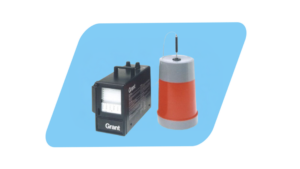
Grant Instruments Chocolate Temperature Logger
The Digital Revolution
The advent of digital technology marked a significant turning point in data logging. Digital data loggers provided the ability to take measurements and store the data in non-volatile memory from which it could be downloaded, printed, archived or transferred to other programs for analysis. These loggers replaced analog systems, offering improved accuracy, reliability, and versatility. These devices could also store large amounts of data electronically, making it easier to analyze and share information.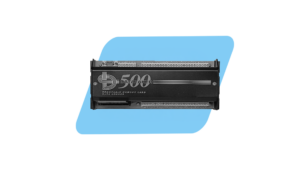
dataTaker DT500
Advancements in Data Storage and Connectivity
As processing power increased, data loggers became capable of evaluating data as it was measured providing local alarms, calculations and statistics. At the same time, data storage capacities improved allowing the logger to store years’ worth of data. This development enabled long-term monitoring and analysis of trends and patterns. Additionally, the integration of wireless communication technologies allowed data loggers to transmit data remotely, eliminating the need for physical access to the device.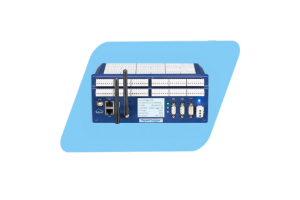
Delphin Expert Logger 100 wLan/Antennas
Miniaturization and Versatility
The miniaturization of electronic components led to the development of smaller, more portable data loggers. The compact devices could be easily deployed in various environments, including inside other pieces of equipment, in remote locations and harsh conditions. Furthermore, data loggers became increasingly versatile, capable of measuring a wide range of parameters such as temperature, humidity, pressure, flow, vibration, and other electrical signals and sensors.
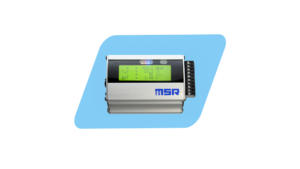
MSR 255
Cloud-Based Data Management
The rise of cloud computing has transformed the way data is managed and accessed. Cloud-based data logging platforms provide secure and scalable storage solutions, allowing users to store, analyze, and share data from anywhere in the world. Data loggers can push data to the cloud using a variety of communications methods including Ethernet, WiFi, Cellular, LoRaWAN and even Satellite. Such cloud based software platforms often include advanced analytics tools, enabling users to extract valuable insights from their data.
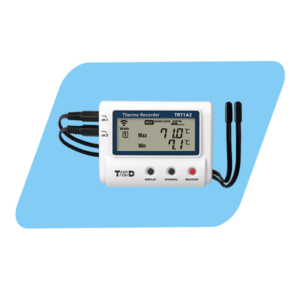
T&D TR-71A2
The Internet of Things (IoT) and Data Logging
The Internet of Things (IoT) has revolutionized the way devices connect and interact. Data loggers are now an integral part of IoT networks, autonomously collecting and uploading data to enable real-time monitoring and control of various systems. By combining data from multiple sensors and devices and allowing distributed monitoring points, IoT-enabled data loggers can provide comprehensive insights into complex processes.
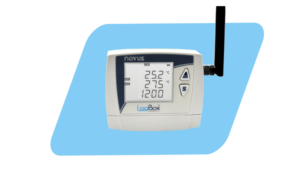
Novus Logbox LTE
Future Trends in Data Logging
As technology continues to advance, we can expect to see even more innovative data logging solutions. Some potential trends include:
• Artificial Intelligence (AI) and Machine Learning: AI and ML algorithms can be used to analyze large volumes of data collected by data loggers to find trends, identify anomalies, and make predictions.
•Edge Computing: Using enhanced CPU power, these devices can process data closer to the source (at the edge of the network) to reduce latency and improve real-time responsiveness.
•Energy Efficiency: Data loggers are becoming more energy-efficient, providing extended operation from battery, solar or energy harvesting, allowing use in remote or difficult to access locations and reducing their environmental impact.
In conclusion, the evolution of data logging technology has been remarkable, transforming the way we collect, store, and analyze data. From early analog devices to sophisticated IoT-enabled systems, data loggers have become essential tools in countless industries. As technology continues to advance, we can expect to see even more innovative and powerful data logging solutions.
Leave a Reply
You must be logged in to post a comment.