



Introduction: The Unseen Dangers In Art Transportation
The world’s priceless art is constantly on the move, traveling between museums, galleries, and private collections. According to recent data, the estimated value of art transported globally each year is around $68 billion! During these journeys, paintings face numerous risks, particularly from shocks and vibrations. Rough handling at museums, bumpy truck rides, and airport cargo operations can all lead to damage, potentially resulting in significant financial loss and the irreplaceable loss of cultural heritage. For example, a ceramic bust created by Picasso’s shattered while being transported in a shipping case. Imagine the cost of a damaged masterpiece, not just in monetary terms, but in the loss of history. This project aimed to redefine how we understand and mitigate these risks, leading to improved packaging and safer transport.
The Research Project: A Collaborative Approach
The research initiative (www.gemaeldetransport.ch) was undertaken to develop a new system for classifying the shocks and vibrations that occur during artwork transport. By understanding these forces, we can better assess risks and establish tolerances for preventive measures. The project combined laboratory simulations with real-world transport measurements to evaluate existing packaging and develop future solutions.
This interdisciplinary team included experts from the Department of Conservation and Restoration (KuR) at the University of Bern/Bern University of the Arts (HKB) and the Institute for Mechatronic Systems (ifms) at the Bern University of Applied Sciences in Burgdorf, Switzerland. The project was supported by four business partners: a Swiss insurance company and the four leading Swiss art transportation firms plus specialists from various Swiss museums as partners that were able to contribute practical experience in this area.
Monitoring Real-World Shipments: Understanding Forces At Play
Initially, a custom-built measurement system was used to record shocks and vibrations inside packing crates. While this highly accurate system allowed measurements to be carried at a measurement rate of up to 2,000Hz over a period of several days, this system was expensive, complex, and cumbersome. It was impossible to pack this system into the crate along with the painting – instead it had to be packaged in a separate box that is connected via cables to the acceleration sensors mounted inside the painting’s crate.
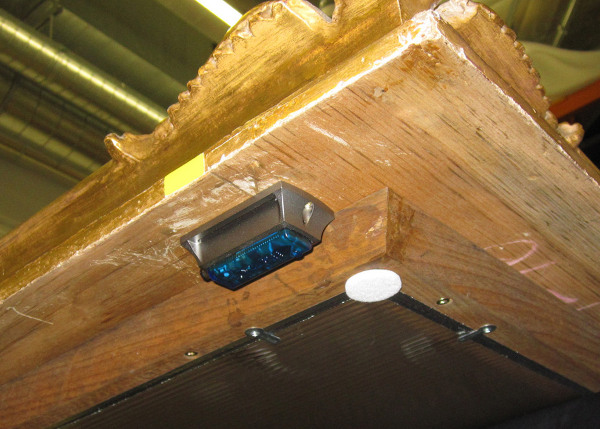
Figure 1. MSR165 Mounted On A Painting Frame
A more practical solution was found in the MSR165 data logger. This compact device, equipped with an internal tri-axial acceleration sensor, humidity sensor, and a 4 GB micro SD memory card, allows for continuous measurements up to 3 days. Its small size and integrated sensors enable it to be mounted directly to a painting’s frame or inside a crate, eliminating the need for bulky equipment and cables.
While the MSR165 has only been used to measure the shocks and vibrations acting on the frame of a painting or on the internal wall of a packing case, its four additional analogue inputs allow additional uniaxial acceleration sensors to be connected so that vibrations in the fabric supporting the painting can also be measured.
The MSR165 recorded data continuously at a sample rate of 1,600 Hz, allowing researchers to capture every shock and vibration event. The data was then downloaded and analyzed using software MATLAB to determine maximum values, RMS levels (a measure of average vibration intensity), and dominant frequencies.
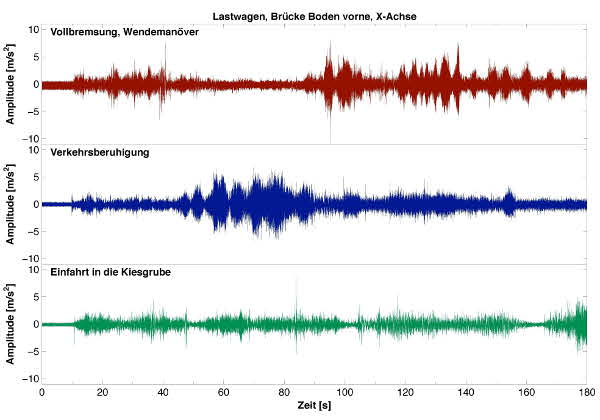
Figure 2. Vibration Level Along 3 Axes
In addition to mechanical stresses, climatic variations can also damage artwork. The MSR165’s humidity sensor allows for the simultaneous monitoring of temperature and humidity, providing a comprehensive view of the environmental conditions during transit.
Evaluating & Improving Packaging
The type of packaging used for artwork varies depending on the painting, route, and transport method. From simple bubble wrap to elaborate double isolated packing crates, the goal is to minimize both continuous vibration and shock events during transport.
To compare the effectiveness of different packaging systems used by different shipping companies, test journeys were conducted using trucks with air suspension. Up to 8 identical test paintings, each packaged differently, were subjected to the same stresses. MSR165 data loggers attached to the frame of each test painting recorded the vibrations experienced during the journey over highways, motorways and city traffic. At the same time, the custom measurement system recorded vibrations at the truck’s floor and walls.
The data collected from these tests allowed researchers to assess the pros and cons of various packaging methods and develop strategies for optimization. By analyzing the vibration data, they could see how well each packaging system protects the art. The results of the research project, which can be viewed at www.gemaeldetransport.ch, highlight the pros and cons of the different packaging methods and offer suggestions for optimizing them.
Key Findings & Future Directions
The use of MSR165 data loggers has proven to be a valuable tool for understanding and mitigating the risks associated with artwork transport. By collecting detailed shock and vibration data, we can develop improved packaging solutions that minimize damage and ensure the safe arrival of priceless art. We encourage museums and transport companies to consider the benefits of using data loggers like the MSR165 to monitor high value shipments and enable data-driven packaging improvements. By working together, we can ensure the safe transport of the world’s art treasures for generations to come.
This Application Note has been adapted from an article written by MSR Electronics GmbH. MSR is the manufacturer of the MSR165, their best-selling data logger for vibration and shocks.
Help ensure your shipments are properly protected. For more information on the MSR165, or to find the ideal solution for your application-specific needs, contact a CAS DataLoggers Application Specialist at (800) 956-4437 or request more information.