


Liz Zala
Creating a Calibration Polynomial for dataTaker Scaling Using Excel
Using the Bestselling dataTaker Data Loggers Many measurement instruments do not have a linear measurement scale, and require a more complex equation to properly scale them to engineering units in a dataTaker data logger. However, you can use Microsoft Excel to create the correct polynomial equation using the calibration sheet included with these devices. All … Continued
How to View dataTaker Data Files in Excel
To view dataTaker data files in Excel, first connect to the dEX web server in the dataTaker by typing the IP address (as given on the data logger’s display) into your browser. Click on the ‘Monitor the Logger’ button on the homepage, which brings up the main monitor window. Now click on the ‘Retrieve Data’ … Continued
Updating Modem Module Firmware on DT8xM Model Data Loggers
Featuring Integrated Cellular Modems For Remote Applications The bestselling dataTaker DT8xM intelligent data loggers offer users all the capabilities of the popular DT8xM models while adding a built-in cellular modem to suit a wide range of remote monitoring applications. Entirely eliminating the need to travel out to the logger and manually retrieve recordings, the DT8xM’s … Continued
Using dEX to Create an OnInsert Job with a dataTaker DT8x Series 2 or 3
Setup Ease of Programming with dataTaker Intelligent Dataloggers OnInsert jobs offer users a convenient backup on USB stick when working with the popular dataTaker line of intelligent dataloggers. When done writing the program in dEX, you run the command and it creates a USB stick program to reprogram the dataTaker, and if you lose the … Continued
Totalizing with dataTaker DT8x Data Loggers
Utilizing dataTaker Intelligent Universal Input Dataloggers Systems integrators often receive requests for help with datalogging applications that require totalizing to get volume, event counts or the total energy produced or consumed. Using the internal channel variables and calculation capabilities of the dataTaker DT8x series of intelligent dataloggers, it is quite easy to capture cumulative totals … Continued
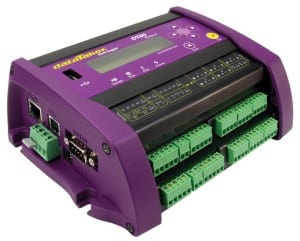
Wind Speed and Direction Measurements Using a dataTaker DT8X Data Logger
Working With the Bestselling DT8X Series of Flexible Data Logger The popular dataTaker line of data loggers are commonly employed for monitoring environmental conditions including wind speed and wind direction. Given the flexibility of the DT8X series dataloggers, there are several options in how these measurements are configured. Described here is a set-up that was … Continued
How to Monitor Pump and Motor Run Time
Using the Bestselling dataTaker DT8X Series Pump and motor run time are easily monitored using the popular dataTaker line of data loggers. Every product in the line except the DT82E environmental logger can monitor up to 8 motors or pumps using this method, while the DT82E can monitor 4 in this manner. The project requires … Continued
How To Automatically Unload Data From a DT8X Datalogger Using FTP
Using dataTaker’s Flexible DT8X Series Data Loggers This brief tutorial will show users how to automatically unload data from dataloggers in the popular DT8X series by using FTP. This is done to allow the loggers to periodically push the data automatically to a server without any user interaction required. Automatic unload is accomplished in a … Continued
Low-Cost Solutions for Chip and Board Level Tests
ADwin Real-Time Data Acquisition Systems Depending on the complexity of analog and digital technology-based IC chips and electronic boards, there are different test solutions available for R&D and production line testing. While complex and expensive chips and boards are tested with large, sophisticated testers, more cost-effective test solutions are a necessity when testing low-cost chips … Continued
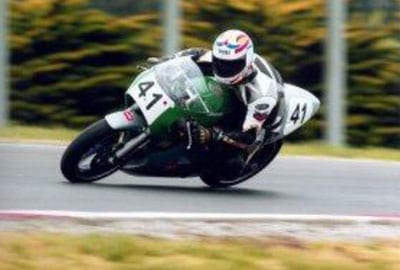
The World’s Fastest DT80
dataTaker DT80 Intelligent Data Logger Hits The Track Stephen Harrison, an employee at dataTaker Pty Ltd and Sales Manager for Australia and New Zealand, asked himself the question “How fast can a DT80 go?” The answer to date has been nearly 149 MPH and 0-124 MPH in 10 seconds. Stephen took his work both to … Continued